
Go GDPR: your clients' privacy isn't a hassle, it's an asset
Names, numbers, preferences, technical notes: every day your salon handles sensitive data. Discover how Go GDPR secures it without the paperwork.
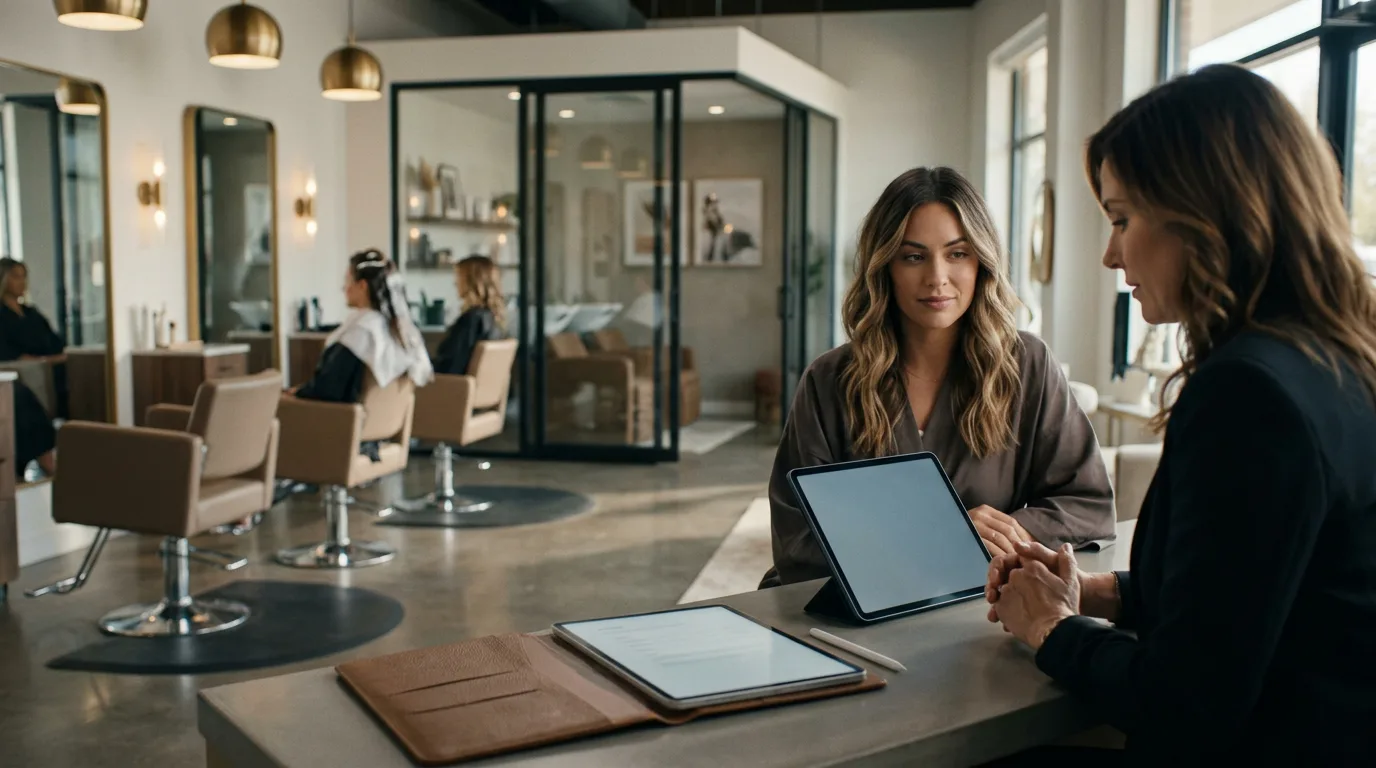
The real stain that won't come out isn't the tint
There's a stain no professional product can remove: the one left by a data breach. A file with clients' phone numbers sent to the wrong email, a paper diary forgotten in the waiting room, a privacy consent that was never truly collected. These are damages that don't show up immediately, but when they do surface they cost far more than a botched dye job: fines, loss of trust, a damaged reputation.
And yet, in the day-to-day running of a salon, GDPR is often treated as a bureaucratic detail, something to sort out "when there's time." The problem is that time, almost always, never comes. Meanwhile, data keeps passing through your hands: first and last name, mobile number, color preferences, allergies, technical treatment notes, sometimes even information about skin or scalp health. Sensitive data, handled every day, often without a system that truly protects it.
GDPR is not optional
This needs to be said clearly, without beating around the bush: the General Data Protection Regulation is not a recommended best practice, it's the law. It applies to multinational corporations and it applies to the salon around the corner with three chairs. The Data Protection Authority can inspect anyone who processes personal data as part of their business, and a hairdresser certainly does.
The difference between those who risk a penalty and those who don't often isn't about the size of the business, but about its organization. Those who have a structured system for collecting consents, limiting access, and storing information in compliance work with peace of mind. Those who improvise with scattered sheets, notebooks, and WhatsApp messages will sooner or later find themselves exposed.
What changes with Go GDPR
Go GDPR was created to solve exactly this problem, integrating into the management software you already use every day. It's not a separate software to learn, not yet another platform to open: it's a feature that works within the tools you already use to manage appointments, clients, and payments.
In concrete terms, here's what this means for your salon:
- One-time access configuration: you decide who, among you and your team, can see which data. A junior staff member doesn't need access to a client's financial history, a receptionist shouldn't see confidential medical notes. Set it up once and the system respects it every time.
- Legally compliant consent collection: every client signs (even digitally) their consent to data processing, with full traceability of the date, the version of the privacy notice, and how it was obtained.
- Correct and secure storage: data no longer lives in notebooks, scattered Excel files, or personal chats, but in a centralized, protected, and compliant system.
- Reports always ready: in case of an inspection by the Data Protection Authority, you have organized and accessible documentation in just a few clicks, without having to piece everything together at the last minute.
The result is that privacy management stops being a constant worry and becomes an automatic process, integrated into your daily workflow. Zero paperwork, zero sleepless nights, as those who use it every day will tell you.
Why it pays to think about it now, not later
Many owners put off this issue until something happens: a report, an inspection, a request from a client who wants to know how their data is being handled. The problem is that at that point, scrambling to fix things is far more difficult, costly, and stressful than organizing in advance.
There's another aspect, less obvious but just as real: a salon that manages client data well communicates professionalism. In a market where trust is everything, knowing that one's personal information is handled seriously strengthens the relationship between client and salon, just as much as a well-kept environment or impeccable service.
In this sense, privacy management isn't just a legal obligation: it's part of that business culture that distinguishes an operation run with method from one run "by feel." It's the same principle that guides our method: building solid, automated, repeatable processes that take worries off the owner's shoulders instead of adding to them.
One piece within a bigger system
Go GDPR isn't a standalone product, but fits into the set of management tools designed to make your salon run like a real business, from appointment management to the register, all the way to regulatory compliance. Because a solid salon isn't built with a single miracle solution, but with many gears working together, without friction and without gaps.
If today you struggle to say with certainty who has access to your clients' data, how and where consents are stored, or what you would show in the event of an inspection, now is the right time to tackle the issue with method instead of anxiety. Through consulting you can understand exactly where to start to bring your salon into compliance, without upending the way you work every day.
Your clients' privacy is as much a part of your job as the quality of a haircut or color. Treating it with the same care isn't just a matter of law: it's a matter of respect, professionalism, and, ultimately, sound business sense.